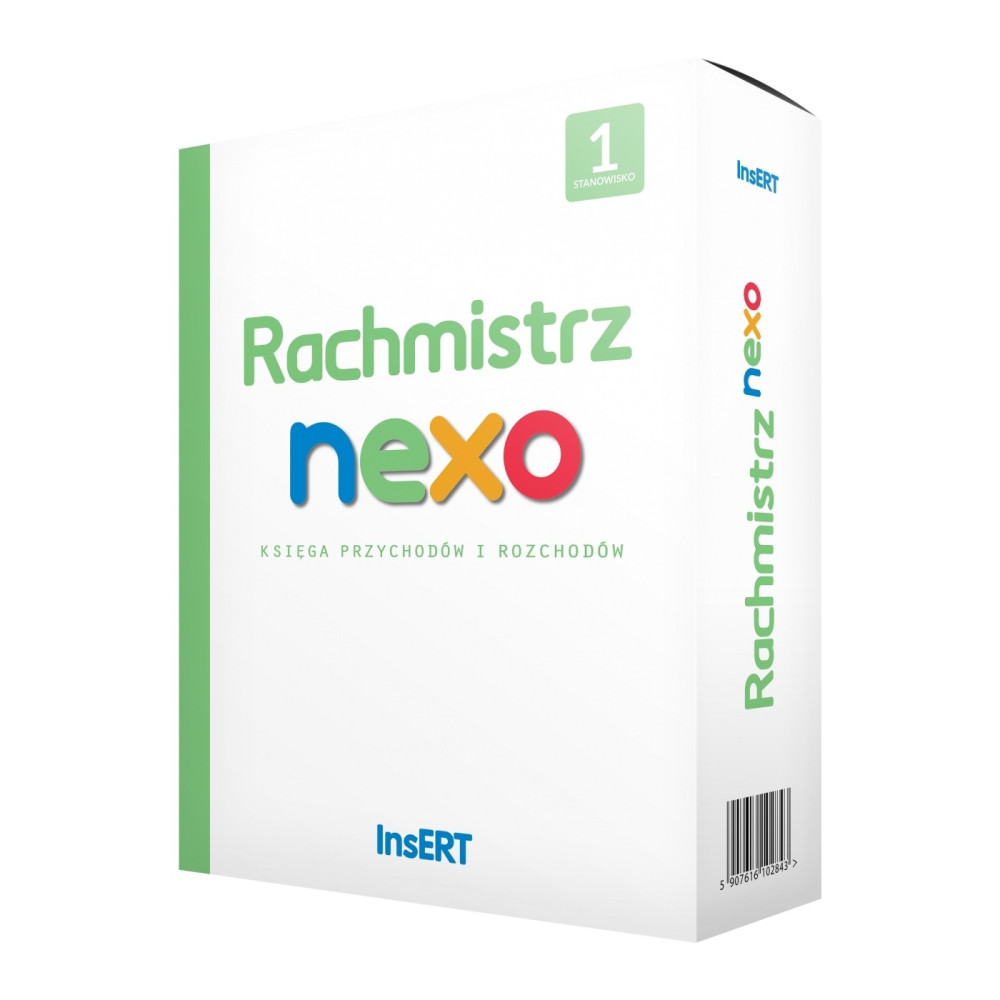
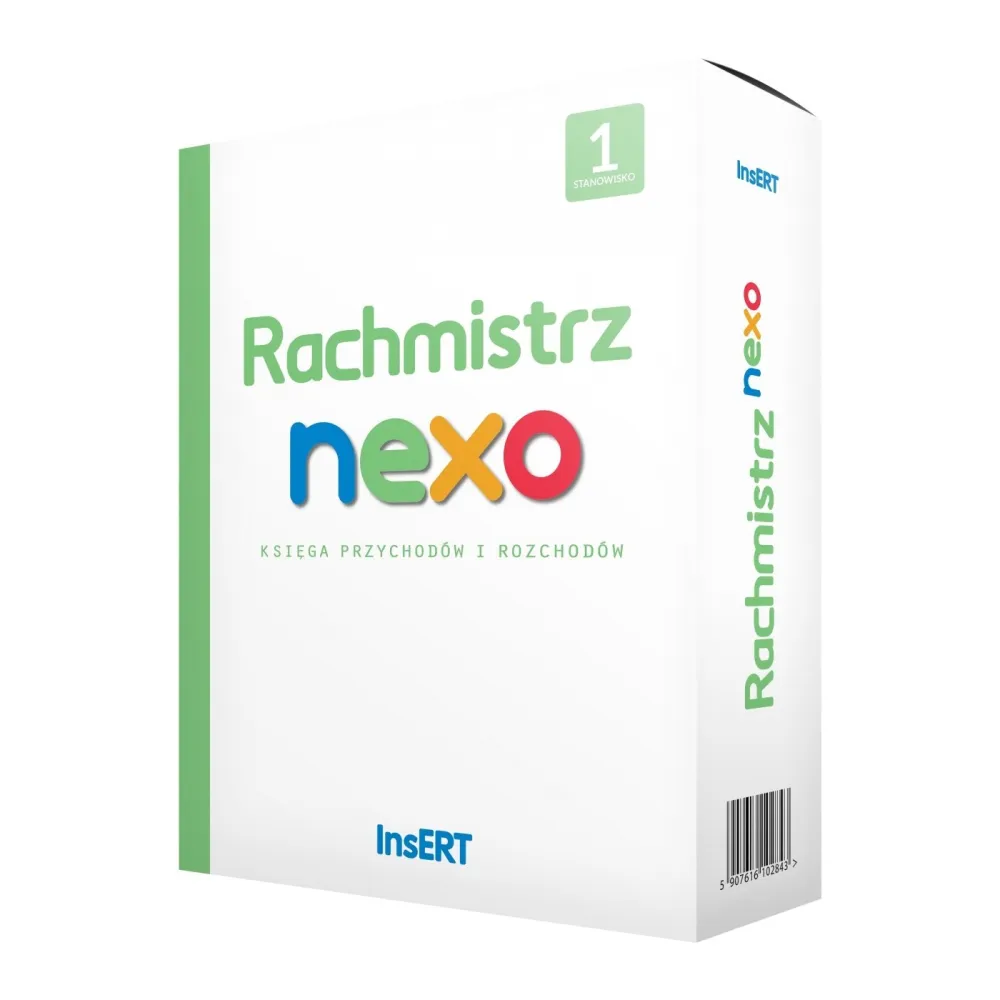
Rachmistrz nexo is a simplified accounting system designed for companies keeping a revenue and expense ledger or settling accounts under the lump-sum tax on recorded revenue. Rich functionality and simple, intuitive operation are the advantages that make bookkeeping with Rachmistrz nexo fast and efficient.
Rachmistrz nexo has been equipped with a number of extensive features that make bookkeeping easier (from VAT records, contracts and payroll, fixed assets and vehicles, through issuing tax and ZUS declarations, cash and bank account operations, to settling receivables and payables). The advantages of the software include, among others, automatic posting of documents and flexible handling of finances and settlements.
Rachmistrz nexo is part of InsERT nexo - an integrated suite that also includes: Subiekt nexo - a sales and inventory management system, Rewizor nexo - a financial and accounting system, Gratyfikant nexo - an HR and payroll system, and Gestor nexo - a customer relationship management system.
Key features of Rachmistrz nexo:
- keeping a revenue and expense ledger or lump-sum tax records (smooth transition between different forms of bookkeeping);
- recording and settling VAT records: purchases, sales (including margin sales), cash-method settlements, VAT corrections for late payments, with the ability to create entries based on the JPK_V7 file and earlier JPK_VAT files;
- records of fixed assets and intangible assets (calculating and posting depreciation taking into account costs attributable to places of use, printing depreciation tables and schedules), as well as records of equipment and stocktaking;
- basic payroll support: personnel records, civil-law contracts and employment contracts;
- an advanced system for owner settlements: from a partner's ZUS contributions, through recording income from other sources (EP), to tax deductions and reductions related to various reliefs, including donations related to the fight against COVID-19;
- for lump-sum tax purposes, support for the new 15% rate in effect since January 1, 2021;
- records and settlement of private vehicles used for business purposes and company vehicles with the possibility of partial or full VAT deduction;
- support for internal evidence documents - the entity's own documents concerning operations taking place within the company;
- support for cash and non-cash cash operations (payment card, vouchers), cash reports;
- support for operations related to bank accounts, standard transfer orders, ZUS and tax transfers using electronic banking (offline and online);
- an accounting audit trail, i.e. the ability for authorized persons to analyze user actions in the main accounting records;
- recording and settling receivables and payables, calculating exchange rate differences, integration with revenue and expense ledger entries and VAT entries;
- issuing and printing tax declarations settling the income tax of partners and employees;
- settling VAT using the JPK_V7 file, in effect since October 2020;
- issuing ZUS declarations (RCA, RZA, DRA) with the ability to export to the Płatnik program;
- automatic posting to the revenue and expense ledger or EP and VAT registers using definable schemes;
- integration with the Subiekt nexo sales system;
- the ability to work in single-user or networked mode;
- broad support for generating the JPK_V7 file and its mandatory submission to the Ministry of Finance;
- generating ledgers and accounting documents into JPK files and providing them for tax audit purposes via electronic means of communication or on data storage media;
- support for the centralized VAT settlement procedure, where records are kept at a subordinate unit while settlements are made at the central unit (e.g. local government units responsible for schools, public utility facilities, etc.);
- checking the status of business partners based on data from GUS (Central Statistical Office), Ministry of Finance portals for NIP and VAT, the White List of Taxpayers, the VIES database of active VAT taxpayers, and the register of guarantee deposits;
- communication with customers and employees via the built-in email and SMS client;
- an attachment library allowing external files to be recorded (e.g. contracts in PDF format) - limit of 1,000 attachments.
GDPR (RODO) support:
- purposes and consents for data processing;
- information obligations;
- data protection;
- the right to be forgotten (anonymization).

 Polski
 English
 Secure payments
 Delivery in 1–2 business days
 14 days to return