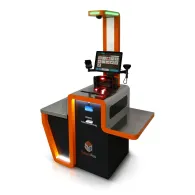
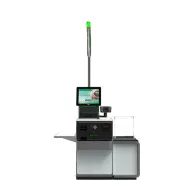
The M4B SELF self-checkout registers are fully automated devices that let customers shop without a cashier's involvement. Self-checkout registers optimize the operation of the entire store. They reduce queues even during peak hours and free up staff from sales duties to focus on other tasks. The SELF self-checkout registers increase customer comfort while shopping, while also helping to lower operating costs.
Design and styling
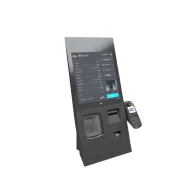
The self-checkout register's housing - inspired by origami - is characterized by a distinctive simplicity of form.
The visually consistent, elegant housing means the SELF self-checkout registers fit any store interior. They catch the eye, so customers can easily find them.
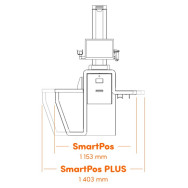
The device's small, compact size means the registers do not take up much space, and the available mounting and configuration variants across the two SELF register models allow every available space to be used to the fullest.
Model SC
A rotating version, which can also serve as a standard cashier station.

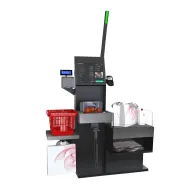
Model S
A version for small and medium-sized stores, for serving customers with small and medium shopping baskets.

Model X
A version for supermarkets and hypermarkets, for serving large numbers of customers doing bigger shopping.

Self-checkout register - modularity that adapts to your store and business
Not sure which self-checkout register will be the best choice? At M4B, we will match the device to your needs. You decide what you expect.
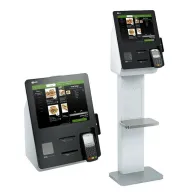
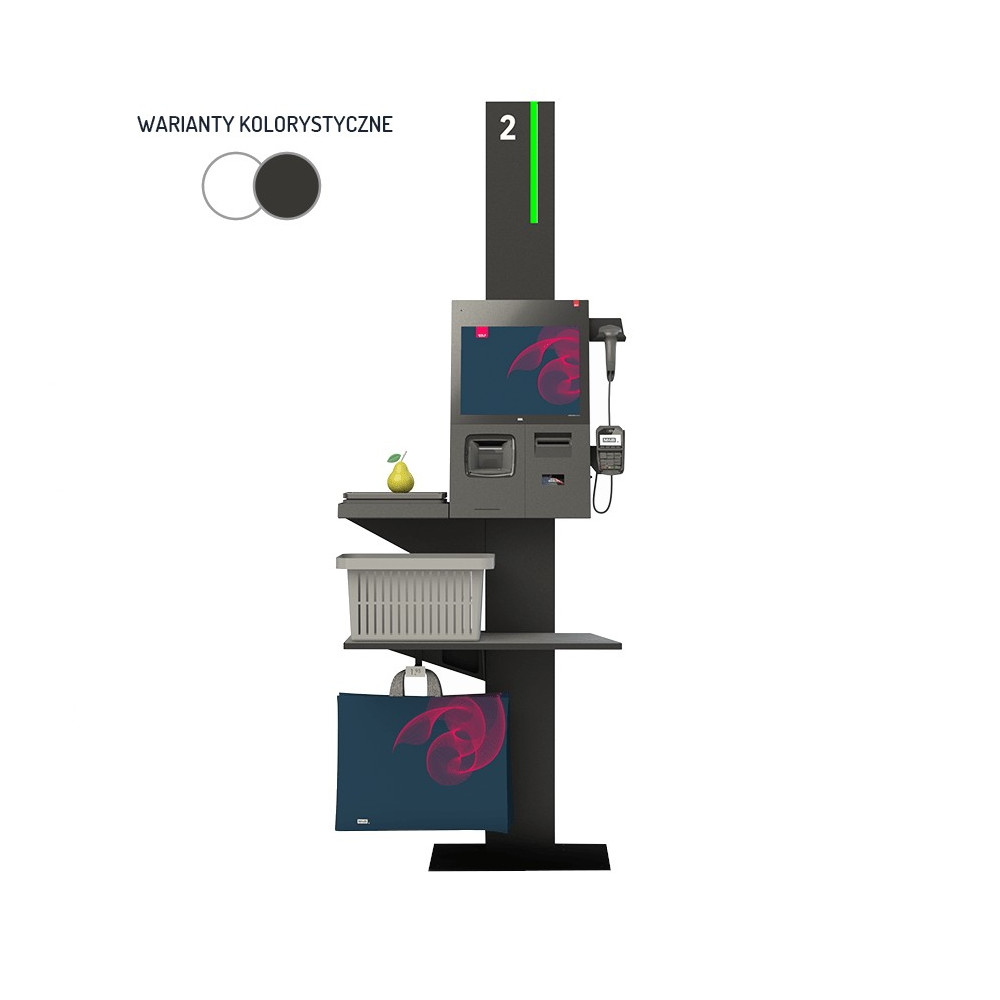
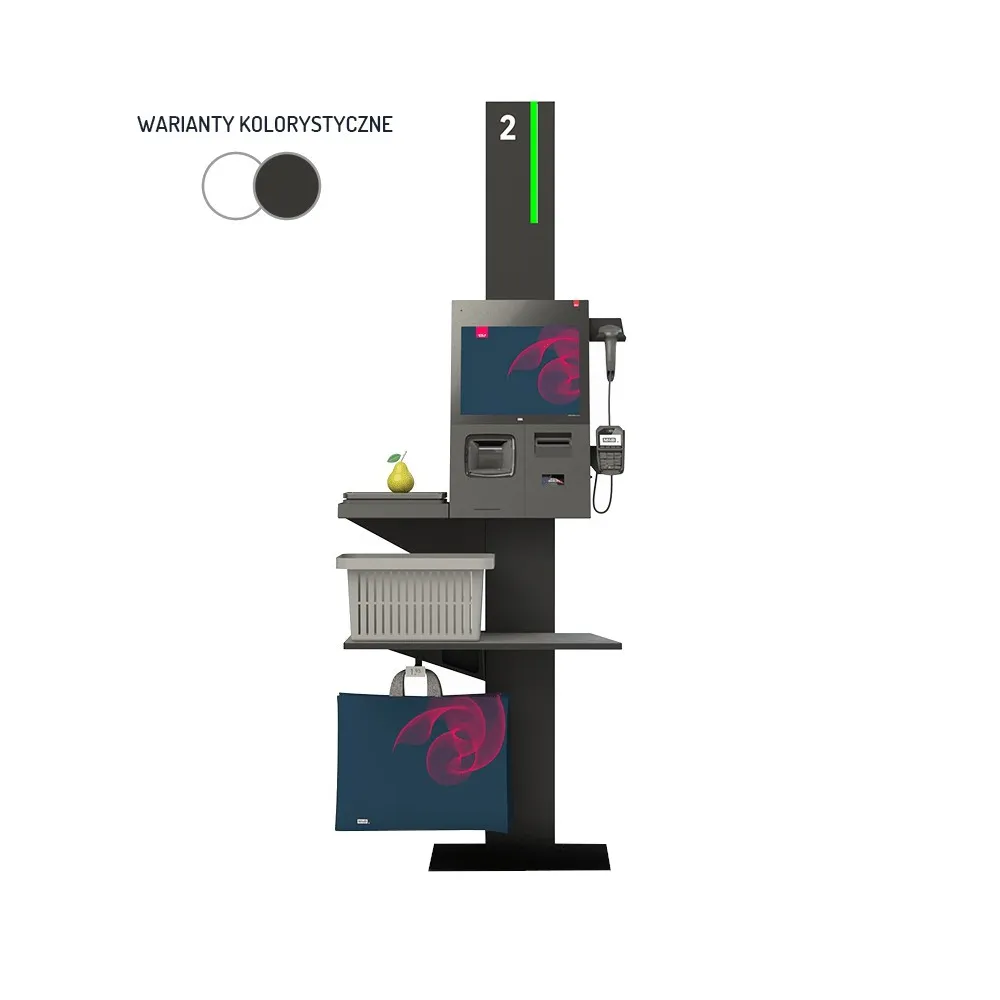
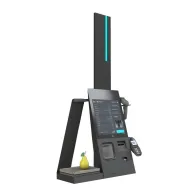
Depending on the available space in your store, the SELF register can be installed on a counter, mounted on a wall, or placed on a pillar as a freestanding unit.
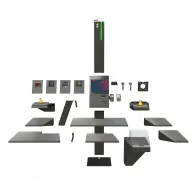
The automatic register can be equipped with additional elements at the customer's request - such as shelves, scales, or a handheld scanner - depending on the industry, basket size, and type of products sold.
Why choose SELF self-checkout registers from M4B:
- Highest quality electronics, mechanical components, and housing materials.
- Industrial-grade components ensuring long-term, trouble-free operation of the devices and lower overall maintenance costs.
- Low TCO.
- Fast and secure checkout process.
- Friendly, clear, intuitive interface.
- Large touchscreen display that makes it easy to find a product without a barcode (both a picture and the product name are shown).
- Option to equip with a camera and connect to monitoring.
- Register architecture supporting Linux or Windows.
- Possibility of integration with a payment system via additional software components.
- Small footprint (various device sizes and mounting methods are available).
- Characterized by many years of trouble-free operation.
- Made in Poland.
SELF already serves millions of customers

Optional Autonomia software. Easy integration with the POS system
Autonomia is software created by M4B for SELF self-checkout registers. It ensures smooth and effective communication with the end customer at the self-checkout station.
The software integrates the self-checkout registers with the store's POS system and, at the same time, enables efficient management of product features and attributes that are not included in the POS system but are necessary for the self-checkout sales process.
Remote access allows the device's operation to be monitored on an ongoing basis.
The intuitiveness and clarity of the AUTONOMIA software interface are the result of analyzing tests involving diverse consumer groups and the collaboration of the best UX specialists.
Soon you can have a fully configured automatic register in your store!
The register's standard equipment includes:
- a 17-inch bright touchscreen with an antibacterial and anti-glare coating,
- a high-quality speaker,
- a passively cooled industrial central unit,
- two microphones (beamforming),
- two housing colors (to choose from),
- a bracket suited to Ingenico Lane 3000/5000 and Verifone P400 terminals,
- a universal handheld scanner bracket.
Optional equipment includes:
- a built-in, fast, and precise code scanner (several models to choose from),
- a scale for weighing unlabeled products,
- a checking scale in various sizes,
- a light signal indicator,
- an additional handheld code scanner,
- a wide selection of shelf sizes and types,
- a wall bracket or a stable pedestal,
- a security camera (monitoring the scanning and bagging areas and the space around the register).


 Polski
 English
 Secure payments
 Delivery in 1–2 business days
 14 days to return