

 Polski
 English
GreenBottle is a Polish company from Białystok that has been creating innovative IT solutions and self-service...
Read more
Most viewed
Most viewed

DIBAL PS-50
PLN 695.00
Regular price
PLN 947.10

DIBAL G-305
PLN 995.00
Regular price
PLN 1,414.50

JPK – Standard Audit File (Jednolity Plik Kontrolny)
Experience of other EU countries
The introduction of JPK in Poland was modeled on solutions successfully implemented in the legal systems of many EU countries (including Austria, Belgium, Denmark, the Netherlands, Lithuania, Luxembourg, Germany, Slovenia, Sweden, Portugal and the United Kingdom).
Logical structures of JPK
The published set of 7 structures covers the most important tax books and accounting records. These are:
Structure 1 – accounting books – JPK_KR
Structure 2 – bank statement – JPK_WB
Structure 3 – warehouse – JPK_MAG
Structure 4 – VAT purchase and sales records – JPK_VAT
Structure 5 – VAT invoices – JPK_FA
Structure 6 – tax revenue and expense ledger – JPK_PKPIR
Structure 7 – revenue records – JPK_EWP
Submission of JPK files
The electronic form of tax books and accounting records is submitted at the request of tax authorities and fiscal audit authorities by means of electronic communication or on an electronic data medium, taking into account the need to ensure the security, reliability and non-repudiation of the data contained in the books.
Entities are required to submit JPK files at the request of tax authorities and fiscal audit authorities within the following deadlines:
-
from 1 July 2016 – large entities
- the VAT file (VAT registers) will have to be sent automatically to the Ministry of Finance no later than 20 August, with data for July 2016. NOTE: this data must be reconcilable with the VAT-7 return;
- other files are generated only at the request of fiscal audit authorities;
-
from 1 July 2018 – micro, small and medium-sized enterprises.
- generate the remaining files only at the request of fiscal audit authorities
The monthly submission of the electronic purchase and sales records (JPK_VAT) is carried out by means of electronic communication, taking into account the need to ensure the security, reliability and non-repudiation of the data contained in the books.
The obligation to submit the JPK_VAT file (VAT purchase and sales records) on a monthly basis will apply from:
-
1 July 2016 – large entities
- the VAT file (VAT registers) will have to be sent automatically to the Ministry of Finance no later than 20 August, with data for July 2016. NOTE: this data must be reconcilable with the VAT-7 return;
- other files are generated only at the request of fiscal audit authorities;
-
1 January 2017 – small and medium-sized entities
- will have to automatically send data on VAT registers, i.e. the JPK_VAT file with data for January 2017 must be sent no later than 20 February 2017. NOTE: this data must be reconcilable with the VAT-7 return
-
1 January 2018 – micro-entrepreneurs.
- must automatically send data on VAT registers, i.e. the JPK_VAT file with data for July 2018 must be sent no later than 20 August 2018. NOTE: this data must be reconcilable with the VAT-7 return
- generate the remaining files only at the request of fiscal audit authorities
Benefits for taxpayers
The primary goal of the Standard Audit File is to remove barriers to the electronic transfer of data. The result will be shorter audits, less burden, and lower costs. In many cases, submitting the file will take place solely as part of verification activities, after which an audit of the taxpayer will not be necessary at all. Taxpayers will also gain a new internal control mechanism that will allow them to monitor the work of accounting staff. An additional effect of the solution may be the use of the invoice summary structure as a tool for communication between taxpayers. It will become possible to exchange invoice summaries in XML format, the accounting of which can be automated.
Benefits for the administration
The benefit for the administration will be the automation of tax data verification. The administration will gain a tool enabling quick verification and audit activities. Access to organized data will allow irregularities to be identified quickly and will speed up confirmation of the correctness of settlements. Quickly identifying irregularities will allow more effective action against phenomena such as VAT fraud or tax avoidance.
An additional benefit will be the possibility of standardizing verification and audit procedures, which should translate into more effective management of teams carrying out audit activities. Also significant will be the reduction in costs associated with the increasingly widespread use of electronic documentation.
Handling of JPK-related inquiries
All problems and questions regarding the handling of the Standard Audit File should be directed to info.e-deklaracje@mf.gov.pl.
Posted in:
News
Related posts
-
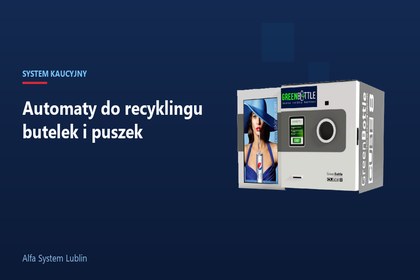 GreenBottle CUBE8 Bottle and Can Recycling Machines
-
 Billeterka by Novitus — The Ticketing System of the Future for Carriers!Billeterka by Novitus — the ticketing system of the future for carriers!Read more
-
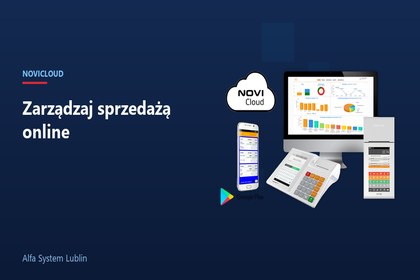 Novitus Fiscal Cash Register Integrated with the NoviCloud SystemRemote sales management with NoviCloud – your business under control at all timesRead more
-
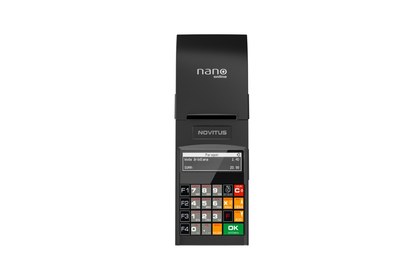 Nano Online Is the Perfect Cash Register for Hair Salons!Nano Online is a cash register that perfectly fits the needs of hair salons, beauty salons, barber shops and SPA studiosRead more
-
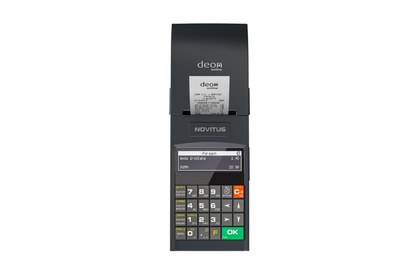 Deon Online in the Online 3.0 SpecificationWe offer the Deon Online version in the Online 3.0 specification.Read more
Add a comment